

- Lawn Turf
- Paving & Stone
Get In Touch With Our Experts Today!
Give us a Call! - Composite Decking
- Soil
- Bark
- Dressing
- Artificial
- Timber
- Seed & Fertiliser
Sign up to get our latest news and blog posts in your inbox
May 15, 2026 Turf Tips
Leatherjackets are one of the most common and frustrating lawn pests in the UK. Unfortunately, they seem to be on the rise in domestic and commercial lawns. But why?
If your once-lush lawn is starting to thin, turn yellow, or feel spongy underfoot, there’s a good chance that leatherjackets could be the cause. The good news is, there’s always a solution!
In this article, our turf experts share everything you need to know about leatherjackets in your lawn. From what they are and why leatherjackets occur to identifying and treating leatherjackets without damaging your grass, this is the guide for you.
Contents Overview:
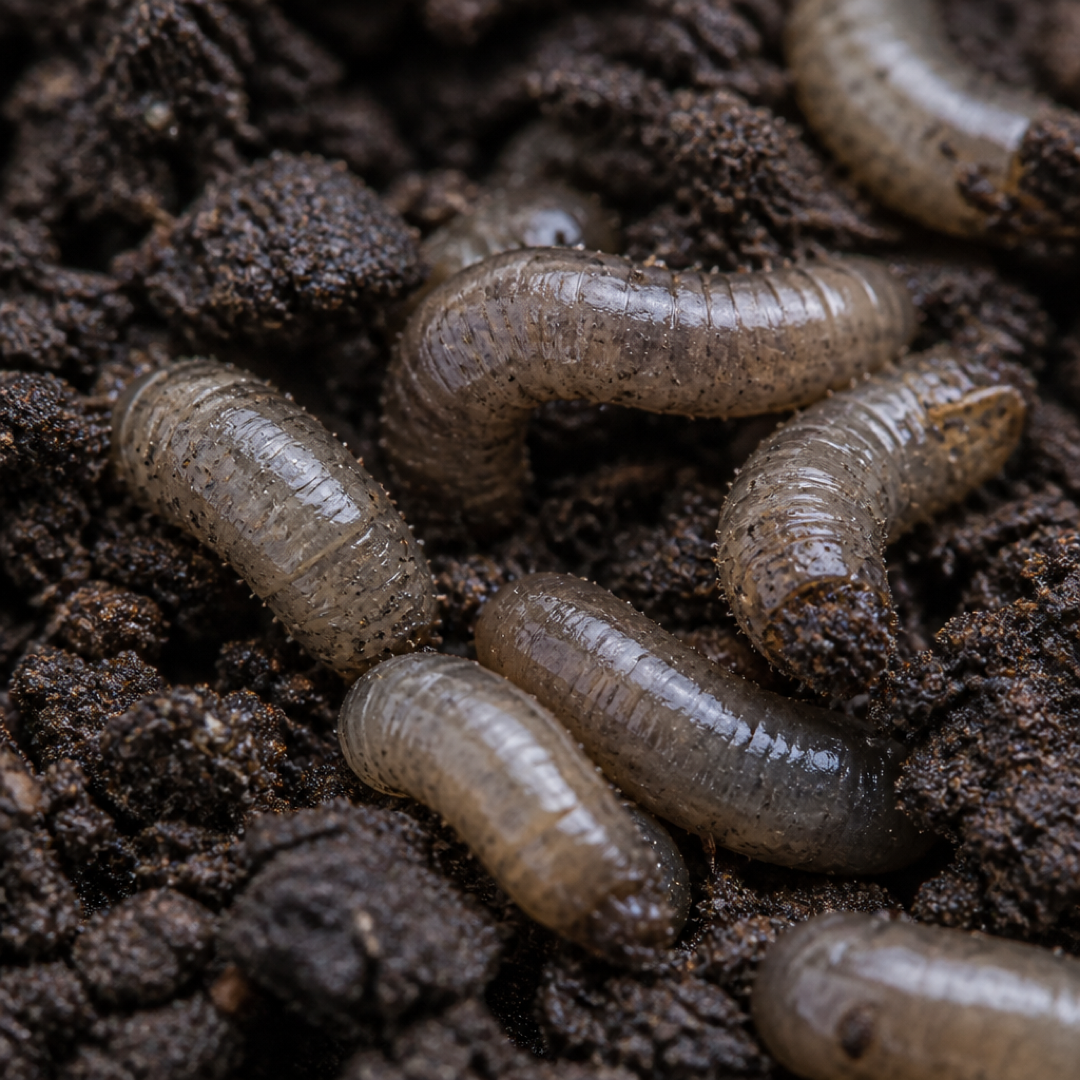
Leatherjackets are the larvae of crane flies, known to most of us as daddy longlegs. They have a maggot-like shape, a grey/brown colour, and no legs. They can range in size from 3 to 40mm and live in the soil beneath your turf.
In the UK, there are two common types of leatherjackets with very different breeding cycles. The type of leatherjacket you’re dealing with determines when issues are most likely to occur.
Many lawns thrive with leatherjackets, causing no visible or detrimental impact to your grass. However, if the number of leatherjackets increases, your turf roots become vulnerable, which stresses your turf and can lead to bigger lawn problems.
Leatherjackets feed off your turf’s roots. So, the longer they are left, the more damage they can cause, including:
The landscaping industry is aware that leatherjackets are a growing concern for UK lawns. But we also know that with the right knowledge and timely action, they can be managed effectively.
The first question to ask is, why are leatherjacket populations increasing? We believe that:
There are some clear signs to help identify if you have larvae in your lawns. Spotting leatherjackets early can make all the difference in managing them.
Look out for the following;
Leatherjackets feed off grass roots, breaking the line that carries key nutrients to produce thick, healthy turf. If there are bare or thin areas across your lawn, it’s most likely that larvae are active underneath.
An easy test is to tug your turf. If you can pull up grass easily, the most likely cause is that the roots have been eaten away. The turf is no longer anchored in and, if not dealt with, will quickly die off.
Leatherjackets are a great snack for wildlife! If you notice more birds around your garden, particularly crows or starlings, they could be attracted to the leatherjackets. This is most likely if they’re pecking at certain spots on your lawn.
The most obvious sign of leatherjackets is seeing the larvae themselves. Focusing on an area of turf that appears to be struggling, cut a small section of turf and look underneath – you will clearly see grey, leathery-looking grubs around 2-3cms long.
As we mentioned, there are two types of leatherjackets that breed at different times. However, the lifecycle of both is very similar. Understanding the lifecycle of leatherjackets is the key to effective treatment of them:
Late Summer (August-September)
Early Autumn (September-October)
Winter (November-February)
Spring (March-May)
Early Summer (June-July)
We have found that the following three solutions effectively deal with leatherjackets in UK lawns:
Growing concerns for the environment mean that chemical control over leatherjackets or any lawn disease is not a popular choice. However, nematodes are an effective and environmentally friendly option.
Healthy, well-cared-for lawns are the best resilience to leatherjackets. Even if leatherjackets are present, a robust lawn will repair and revive itself from any larvae damage.
If your lawn is already struggling, you’re making it more vulnerable to leatherjackets and other lawn issues. This can lead to bigger, more costly problems. Resolving these as soon as they arise is usually the quickest and most effective solution.
Yes, with the right treatment, your lawn can recover from leatherjackets and thrive, looking as good as new! How fast your lawn repairs itself depends on the severity of your leatherjacket infestation. But follow these key steps to get your lawn back on the path to recovery:
If leatherjackets have completely killed your grass, we recommend returfing the area with new, healthy turf.
If you’re dealing with lawn damage or want expert advice on restoring your grass, the team at George Davies Turf & Stone is here to help. With premium turf, topsoil and fertilisers, we can help you get your garden and lawn back to its best!
What are leatherjackets in lawns?
Leatherjackets are small grey-brown grubs that live under the soil. They are the larvae of the crane fly, and feed off turf roots before pupating into adult crane flies.
Where do leatherjackets live?
Leatherjackets live within the soil underneath your turf until they mature and emerge as crane flies.
When is the best time to treat leatherjackets?
This depends on the type of leatherjacket you’re dealing with, but the best time to treat leatherjackets is early autumn (September-October). This is when larvae are small and vulnerable to treatment.
How do I prevent leatherjackets in my lawn?
Although a small number of larvae won’t cause too much damage, you can prevent a larger infestation by maintaining a healthy lawn. Ensure your lawn has good drainage, aerate compact soil and apply seasonal fertiliser.
CALL US NOW ON 01234 818 253
 Satisfaction Guaranteed
 5 Star Reviews
 99.6% On-Time Delivery
 Open Trade Account