

- Lawn Turf
- Paving & Stone
Get In Touch With Our Experts Today!
Give us a Call! - Composite Decking
- Soil
- Bark
- Dressing
- Artificial
- Timber
- Seed & Fertiliser

Sign up to get our latest news and blog posts in your inbox
May 12, 2026 Raised Bed MixSoil Tips
The ready-to-use, super-soil for flourishing flower beds and boxes
For many, soil is just soil. For those in the know, the right type of soil is the secret to any successful growth – turf, plants, or vegetation. Raised bed mix is a favourite nutrient-rich soil among gardeners, landscapers, and allotment owners for improved growing results. Its unique characteristics specifically improve soil structure and support healthy plant growth, making it a must-have in any gardener’s shed!
In this article, our experts share why raised bed soil is the go-to soil for anyone serious about boosting their plants’ performance.
Raised bed mix, also referred to as horticultural loam, is a carefully balanced, fertile soil blend designed to support strong, healthy plant growth. If you’re seeking taller perennials, bigger veggies, or blooming flower beds, premium raised bed mix is the way to go!
Unlike general-purpose soil, raised bed mix is known as the best soil for raised beds. It’s fine, sandy texture improves drainage while still holding its structure. This means that the essential nutrients your plants need remain within the soil, creating the perfect growing environment.
Successful plant growth comes from strong root development; strong root development is reliant on high-quality, nutrient-rich soil. Raised bed mix has been formulated to provide precisely that. Here’s why everyone should be using raised bed mix within their landscaping:
Raised bed mix has quite an open texture, reducing the risk of compaction. It helps existing soil improve its structure, allowing roots to move through and access key nutrients efficiently. This is crucial for flower beds or boxes that have sealed bottoms.
With a good level of moisture retention, nutrients remain within the raised bed mix, making it easier for roots to access them, no matter the time of year or weather conditions. This helps reduce stress on your plants so that they can survive each season.
Read More: Is Your Turf Stressed?
Raised soil mix retains enough water to relieve stress on your plants. However, it’s fine; the sandy texture allows it to drain water freely, avoiding waterlogging and helping retain its structure.
Read More: How to Prevent My Lawn From Becoming Waterlogged
The best part of the raised bed mix is its reliability! Whether you’re planting a flower bed ready for spring, looking for a soil mix for deep-rooted vegetables, or reviving commercial grounds, raised bed mix performs consistently no matter where you add it.
Ultimately, using high-quality raised bed soil leads to fewer failed growing seasons and more guaranteed planting success! Even under unfavourable conditions, soil specifically for raised beds contains the vital resources your plants need to grow stronger and healthier.
This is one of the most common questions we’re asked when it comes to soil. Let’s clear up the difference between topsoil and raised bed soil, including what it is, where to use it, and why.
Topsoil is the uppermost layer of soil removed from the ground when turfing. It can vary in quality depending on its location, but it can be easily improved by applying a turf-specific topsoil.
It is best used for:
Raised bed mix is a more refined soil, specifically formulated for growing. It offers higher fertility levels and improved moisture and nutrient retention. It should be used where plant performance matters most.
It is best used for:
The most common places where our easy-to-use raised bed mix is used by our customers include:
Whether you’re planting perennials or mixed borders in your garden or seasonal corporate displays, nutrient-rich soil for raised beds promotes stronger blooms for that wow factor! It’s particularly valuable when:
For landscapers or garden maintenance companies managing large outdoor spaces such as schools, community parks, and housing developments, consistency is critical. Not only for labour, time and money-saving reasons, but to deliver results to your clients again and again. By using professional raised bed soil, you can:
When your reputation depends on the finished result and consistent outcomes, soil quality cannot be compromised.
For keen growers, soil quality directly affects yield. With unpredictable weather conditions, you want a raised bed soil for allotments that helps boost nutrient uptake and growth.
The great news is that our raised bed mix is extremely easy to use, and can also be used all year round. Start by following these four easy steps:
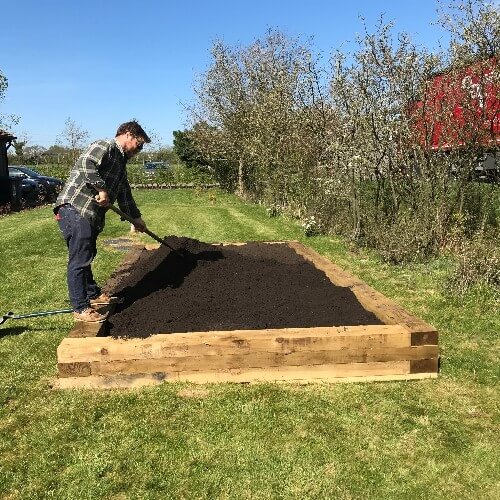
If you are planting a raised bed or vegetable patch, you may benefit from filling the entire area with raised bed mix or blending it with compost for the best results.
Read More: What is the Difference Between Topsoil and Compost?
If you’re serious about investing in your garden or allotment’s future, look no further than raised bed mix. From healthy flowers and tasty vegetables to showcase-worthy planting displays, you won’t regret making the switch. In fact, you’ll be wondering why it took you so long!
Order your raised bed mix online, or if you have any further questions, contact our customer service team.
Yes. But raised bed mix provides an excellent foundation specifically for fruit, vegetables, flowers, shrubs and trees.
We would not recommend using raised bed mix for laying turf. Instead, use turf-specific topsoil that you can order from George Davies Turf & Stone. This will help your turf settle in and grow strong!
The depth can vary from plant to plant. A good rule of thumb is to check the plant’s average root depth and match it. For vegetables and borders, a depth of 150-300mm is a good depth of raised bed mix.
Yes! Raised bed mix at George Davies contains PAS 100 recycled green waste compost, giving it a higher organic matter content level. This means a reduced need for artificial fertiliser; however, it may still be needed for heavier-feeding crops.
In most cases, yes, and it is worth the investment in the long run. Unlike general garden soil, raised bed mix provides a better structure and nutrient balance for consistent results.
CALL US NOW ON 01234 818 253
 Satisfaction Guaranteed
 99.6% On-Time Delivery
 Open Trade Account