

- Lawn Turf
- Paving & Stone
Get In Touch With Our Experts Today!
Give us a Call! - Composite Decking
- Soil
- Bark
- Dressing
- Artificial
- Timber
- Seed & Fertiliser

Sign up to get our latest news and blog posts in your inbox
August 11, 2026 TurfTurf AdviceTurf Tips
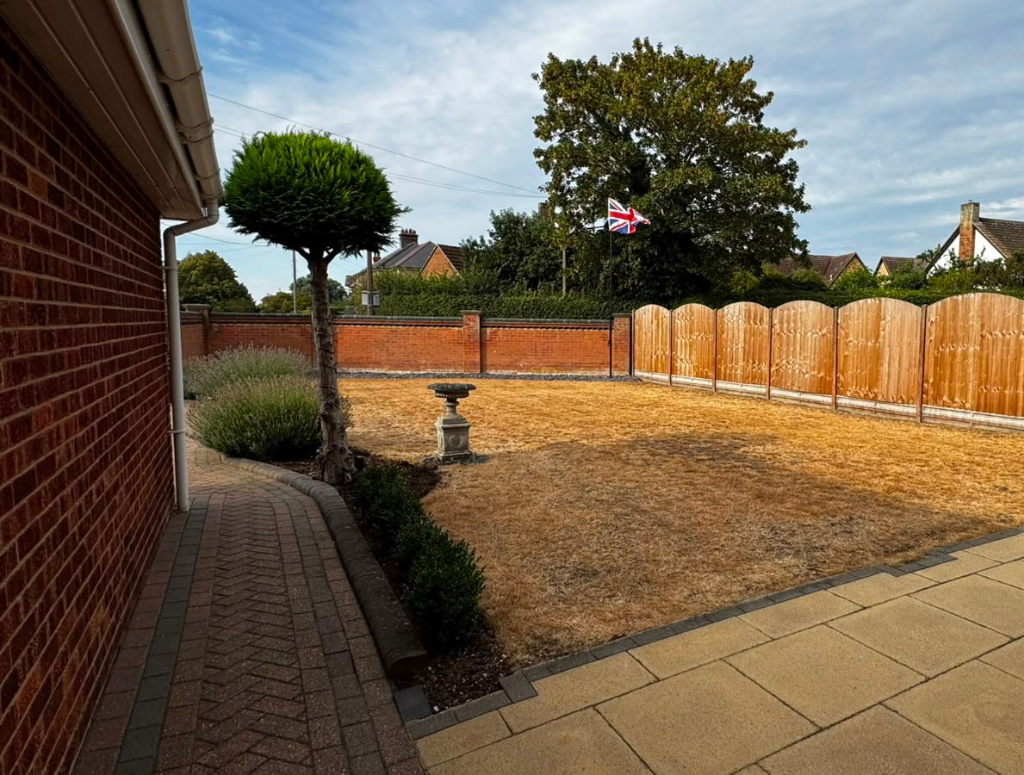
After weeks of hot, dry weather, lawns across the UK are looking decidedly worse for wear. With temperatures continuing to rise, everyone is wondering: is my lawn dead, or will it recover?
Bright green grass has turned a desert brown, the ground is rock solid, and most lawns can only be described as frazzled! The good news is that a brown lawn isn’t necessarily a dead lawn.
In this article, we explain the difference between a dead and dormant lawn, how to tell the difference between them, and how you can returf your lawn successfully once the rain returns!
Ultimately, grass turns brown in extreme heat because it’s exhausted its access to moisture. Without water, it loses its strength, resilience and colour. It also becomes vulnerable to scorching, turning brown or dying off completely.
Grass is surprisingly resilient though, and if your lawn has robust roots, it may simply be dormant. But what’s the difference, and how do you know if your turf is dormant or dead?
Read More: Revive Your Lawn: Solutions for Dealing with Dry Grass
We have two easy ways to test if your lawn is dead or dormant, and whether it will revive after extreme heat.
Take a look at the base of your grass; if there’s a green shoot, this is a sign of growth and that the root is anchored in. It should bounce back quite happily once rain arrives.
To test root strength, pick one of the brownest areas of your lawn, grab a small handful of turf and give it a gentle tug. If the grass stays firmly in the ground, it’s dormant and should recover from the heat.
If your grass pulls out easily, with the root still attached, unfortunately there’s little chance of it coming back. This is a sign that your grass, in that area, has died due to a lack of moisture.
Small patches of dead grass can be easily repaired with grass seed and fertiliser. However, larger areas or entire lawns may require a bigger fix such as installing fresh turf.
Another way to test if your lawn is dead or dormant is by watering a small section.
During a hosepipe ban, you cannot water your entire lawn; if we could, that would solve all of our problems! However, you can use a watering can and focus on one small patch.
If you water the same patch over the next week or two, you will see how your lawn will respond once the rain comes. If you spot new shoots, brighter greens and taller leaves, then the roots are still strong, and your grass will recover.
If, after a week of watering, your grass remains looking like a field of Weetabix, the most likely cause is that your grass and roots have died due to drought. The best solution? Replacing the turf.
Here are our top tips to help your lawn survive a long, dry summer:
Replacing your lawn after a heatwave can be very tempting, and a great option if you can wait until autumn. However, for homeowners wanting a vibrant, healthy lawn before then, you may be looking to install fresh turf ASAP.
When laying new turf, we always recommend removing the existing grass and rotavating the soil to create a soft tilth where new roots can anchor in.
However, to rotavate the soil, you need moisture, especially when working with extremely dry soil. If there’s a hosepipe ban in place, we cannot use excess water to prepare the ground correctly for turf, or follow the 28-day watering window for new turf.
Digging up the dead turf and laying fresh turf isn’t always the best solution. But what is? How do we lay new turf after a heatwave?
When water conservation is critical after a prolonged dry spell, there is another option to laying new turf.
This is a controversial method, but for homeowners eager to have a lush green lawn in time for autumn and winter, this may offer a practical solution that doesn’t cost the earth, waste your time or use unnecessary amounts of water.
The important note here is that new turf still requires water. So, wait for any hose pipe bans to be lifted or when consistent rainfall is due.
Start by putting your lawn mower to its lowest setting. The aim is to cut away as much dead grass as possible.
Use a scarifying machine or rake to remove as much organic matter from the surface of your lawn as possible.
Evenly spread approximately 1 to 3cm of raised bed mix (a mix of compost and soil) across your lawn.
This will create a nutrient-rich layer for fresh turf to sit on, with the raised bed mix helping to retain moisture and support young roots.
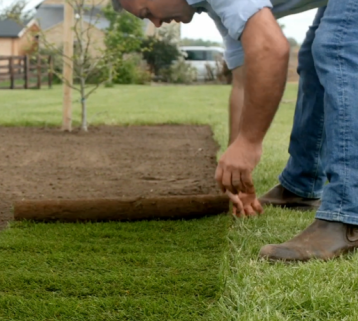
Lay your rolls of turf, one at a time, onto your prepared surface of topsoil and raised bed mix. Follow a brick wall-like pattern, ensuring the edges butt together tightly.
Water your new turf daily to help the new roots work their way through the topsoil and into the existing soil.

Although your grass may have died due to drought, the soil structure underneath is still good, enabling young roots to develop, making this way to lay turf possible.
Timing is crucial with this method, so ensure watering restrictions have lifted and rainfall is due.
Read More: How to Lay Turf – Your Ultimate Guide
If you’re worried about your turf, explore our helpful turf articles. You can also contact our friendly customer service team, who can help you care for your lawn this summer.
In most cases, yes, brown lawns are simply dormant and will recover once rain arrives. Try the tug or water test to see if your brown lawn is dead or dormant.
UK lawns turn brown because they are dehydrated. Due to long periods of hot, dry weather, they have exhausted their water resources, resulting in thin, dull and brown grass.
You should wait until air temperatures cool and moisture levels increase to lay fresh turf after a drought. If there’s a hosepipe ban, you need to wait until that has lifted too.
No. A hosepipe ban means restrictions on the amount of water you can use. Do check your local supplier and region as rules can vary.
High-quality turf that has been grown, harvested and stored correctly will give your lawn the best chance of surviving a heatwave. Clover turf in particular is recommended for its resistance to drought while still providing a green, healthy grass.
 Satisfaction Guaranteed
 99.6% On-Time Delivery
 Open Trade Account