

- Lawn Turf
- Paving & Stone
Get In Touch With Our Experts Today!
Give us a Call! - Composite Decking
- Soil
- Bark
- Dressing
- Artificial
- Timber
- Seed & Fertiliser
Sign up to get our latest news and blog posts in your inbox
November 05, 2025 TurfTurf InstallationTurf TipsWinter turf
Expert advice from the team at George Davies Turf & Stone – your winter-lawn-laying specialists!
It’s a question we hear often at George Davies: “Can I lay turf in winter?” The quick answer: yes! The longer answer: still yes, but you need the proper preparation, weather conditions, and aftercare. With all of these elements, laying turf during winter can be just as successful as laying it at any other time of the year.
In this article, you can discover the advantages of laying turf in winter, our seasonal watchouts, and how to install turf in winter effectively.
Absolutely! Winter is a great time to install turf and is often recommended by turf growers and landscapers. Frost isn’t damaging to turf, and colder temperatures can work to your advantage, as drought or scorched grass is less likely. During winter, the grass growth rate slows, so less watering is required, too. Better yet, the damp conditions provide an ideal environment for your turf to establish strong roots ready for spring.
Frozen soil is no good when laying turf. Not only is it a more challenging task for yourself, but the roots won’t be able to penetrate and establish effectively. Similarly, with waterlogged lawns, soggy surfaces will result in messy and uneven finishes, leaving your turf vulnerable.
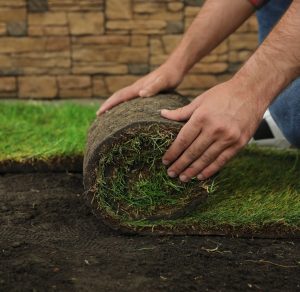
Even in winter, ground prep is essential for successful turf laying. Before you lay your first roll of turf, you must remove weeds, old turf, debris, and level the area. During winter, we encourage adding a layer of high-quality topsoil to aid with drainage. For further advice, check out our Can You Put Topsoil Down in Winter? and How to Prepare Your Soil for Turf articles.
Winter weather is unpredictable! A thaw might follow a freeze, or a downpour might lead to a storm – neither ideal for laying turf. Check the forecast and aim for a mild, dry day to install your turf.
If you have only a small window of good weather to install turf, you want a turf supplier who’s guaranteed to deliver on time. George Davies delivers fresh turf orders within a two-hour window, meaning you can roll out your turf as soon as it arrives.
If you’ve ordered turf but notice the weather changing dramatically, get in touch with the George Davies team. Our experts will do everything possible to preserve or delay your turf order, ensuring it arrives precisely when and where you need it, and in the best condition.
Our ultimate guide to laying turf provides an in-depth step-by-step process, along with a video tutorial from George Davies! But here’s a quick overview to ensure an effective turf installation during winter:
In winter, turf takes a lot longer to grow and establish. Turf roots can take approximately 6 to 8 weeks to anchor and establish a strong root system fully. During this time, avoid having people or pets walk on your turf to preserve its appearance and increase its resilience. A few weeks of not using your lawn in winter will provide a lawn that will last a lifetime! For further advice, read our Top Tips for Laying Turf in Winter blog.
Done right, laying turf in winter can deliver you a well-established lawn ready to flourish come spring. George Davies Turf & Stone have supported many winter turf installations with premium natural turf and efficient deliveries. If you’re ready to start your winter lawn project, get in touch with our friendly customer service team.
Absolutely! At George Davies, we support homeowners and landscapers installing turf all year round. As long as the ground is not frozen or saturated, and the ground is prepared correctly, you can successfully lay turf in December and January.
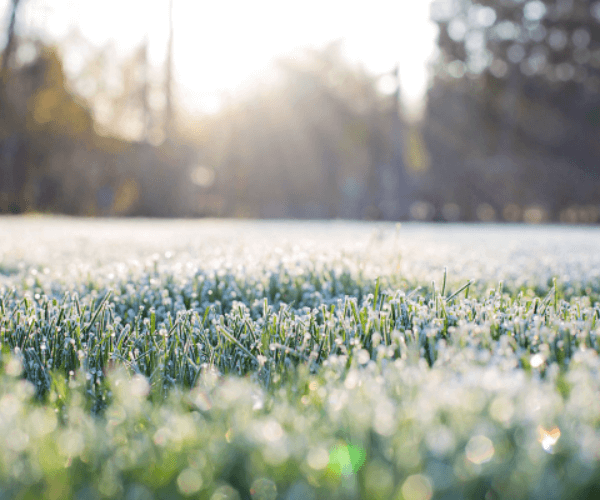
No, frost will not cause damage to your new or existing turf. Light frost will often melt once the sun rises, hydrating your turf and soil. If there is frost on your lawn, avoid walking on it as the leaves may be brittle and break.
Because grass establishment and growth are slower in winter, we recommend waiting 4 to 6 weeks before walking on your newly laid winter lawn. If the grass is frozen or waterlogged, keep pets and people off the lawn to prevent indentations or grass leaves breaking.
A light frost should not cause much harm to freshly laid turf, especially if it were laid onto workable soil. Prolonged frost or heavy snow can cause issues if not handled correctly. Avoid walking on frozen grass and remove large snow piles as soon as possible.
Not at all. As long as you invest in high-quality turf, it should deliver the same stunning results as if it were installed in the spring. At George Davies, we work with the best turf growers in the country and ensure fresh turf is delivered within two hours of being harvested for the best results.
If the soil temperatures are below 5°C or frozen, avoid laying turf. Natural turf requires a soil temperature between 10°C and 18°C to successfully root and develop strong, sturdy growth.
The main risks of laying turf in winter include installing it on frozen or waterlogged ground or neglecting turf maintenance. If you don’t install and care for your turf correctly, your turf roots will struggle to establish, and the grass will become stressed. By following our expert advice, you can go too far wrong.
There’s minimal maintenance for new winter lawns, which is a huge advantage! Turf laid in winter requires watering (if it’s not raining), removing snow (if there is any) and mowing only if there’s continuous growth. When installed correctly, there’s no need to fertilise, overseed, trim, or mow until springtime. For further information, read our turf care tips for December and January.
CALL US NOW ON 01234 818 253
 Satisfaction Guaranteed
 5 Star Reviews
 99.6% On-Time Delivery
 Open Trade Account