

- Lawn Turf
- Paving & Stone
Get In Touch With Our Experts Today!
Give us a Call! - Composite Decking
- Soil
- Bark
- Dressing
- Artificial
- Timber
- Seed & Fertiliser

Sign up to get our latest news and blog posts in your inbox
September 23, 2026
For most landscapers, turf arrives ready to lay.
But behind every roll is a growing process that has changed enormously over the past 25 years – and is now having to adapt to increasingly challenging conditions.
Modern turf production is more sophisticated and efficient than ever. Harvesting has become increasingly automated, machinery more precise and advances in irrigation, GPS technology, weather monitoring and soil testing have enabled growers to make much smarter use of water, fertiliser, fuel, machinery and people.
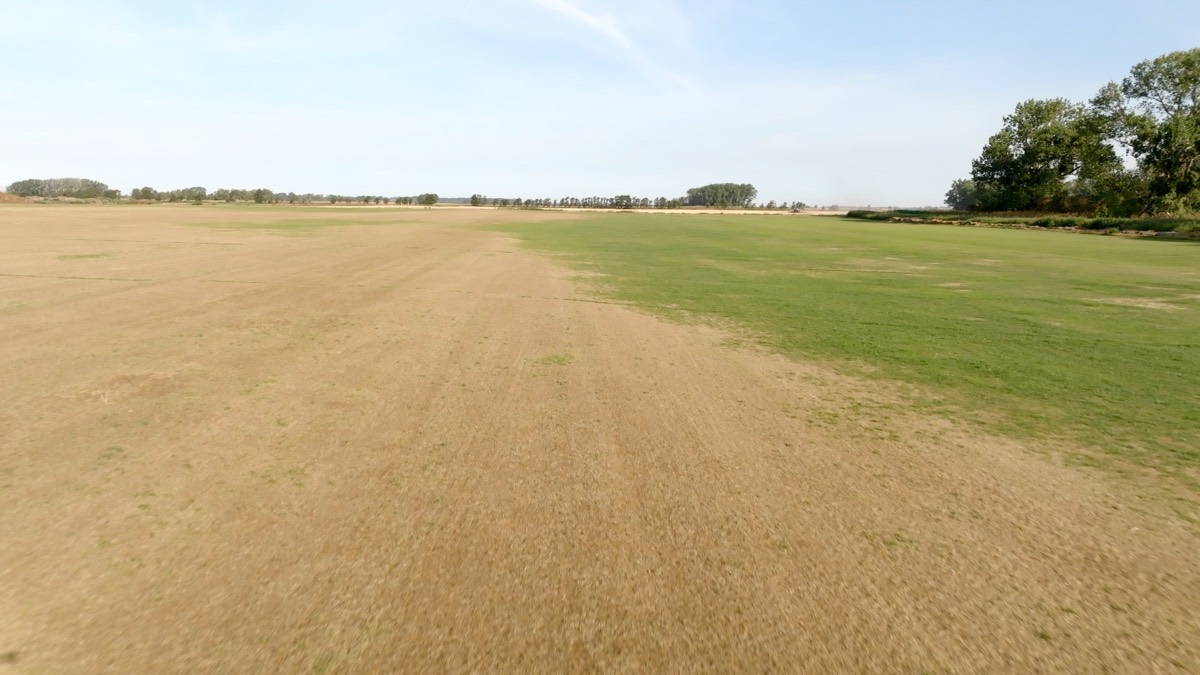
Yet the exceptionally hot and dry conditions experienced during the summer of 2026 demonstrated that there are some challenges even greater efficiency cannot solve.
As part of the Harrowden group, we’ve been looking more closely at what those changing conditions mean for the future of turf production – and ultimately for the landscapers and customers who depend upon a reliable supply of quality turf.
The conditions experienced during 2026 placed significant pressure on turf production across the UK.
But longer-term data suggests the industry needs to think beyond one exceptionally challenging summer.
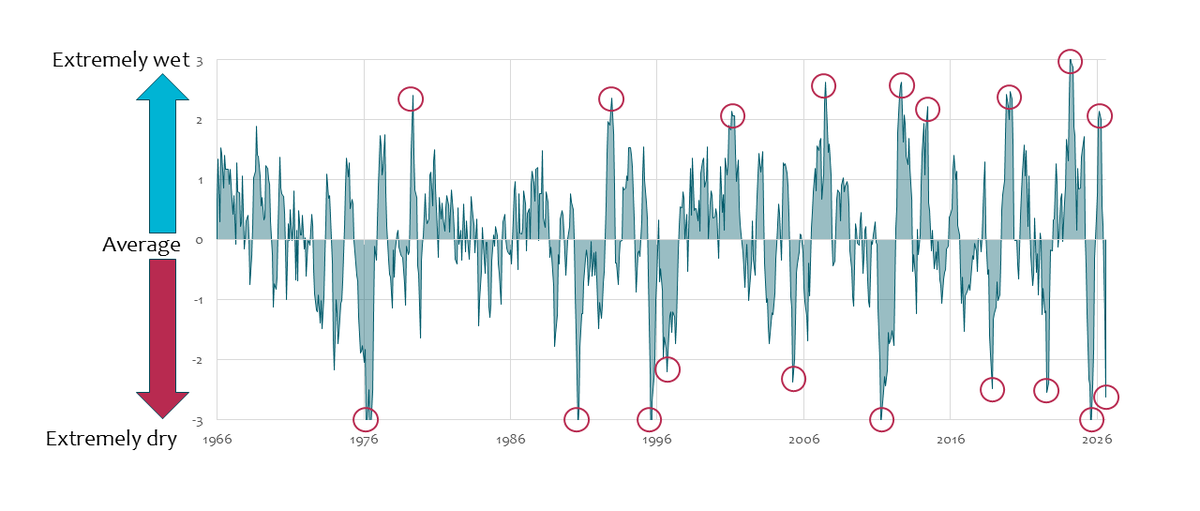
Weather Whiplash graph. Rainfall over the past 60 years for a representative catchment in central England tells a story of ‘weather whiplash’. Extreme wet and dry periods are becoming more common, with conditions changing more quickly than in the past. Source: UK Centre for Ecology & Hydrology (UKCEH) SPI-6 rainfall data. Further analysis and visualisation by Water Resources West.
The graph above illustrates the increasing volatility growers are having to contend with – not simply prolonged dry periods, but increasingly extreme shifts between wet and dry conditions.
And that matters because successful turf production depends upon a combination of factors coming together at the right time.
Analysis provided to Harrowden by environmental data scientist Dr Tim Farewell shows that the time between the start and end dates of the theoretical thermal growing season in Eastern England has increased by approximately seven days per decade.
Average growing seasons have increased from around 222 days in the 1980s to approximately 244 days during the 2020s.
On paper, that might sound like good news for turf growers.
But temperature alone doesn’t determine whether a turf crop can be successfully established and grown.
Over the same period, average summer temperatures have increased, spring and summer rainfall have fallen and the number of days experiencing significant summer soil-moisture deficits has risen considerably. Winters, meanwhile, have become wetter.

Soil moisture deficit across Eastern England: Mean daily soil moisture deficit (SMD) during 2026 (red line) compared with the historical range for 1980–2024, alongside 2025 (orange line) and the long-term median. The graph shows 2026 rising rapidly from spring and remaining at the upper end of the historical range through much of the summer. Source/analysis: Dr Tim Farewell, MapleSky Ltd using Met Office HadUK-Grid data.
Dr Farewell explains: “The UK climate is changing to one with an earlier start, and later end, of the theoretical grass growing season. But this does not necessarily mean easier growing conditions. With springs and summers both becoming much hotter and drier, this increases both soil moisture deficits and water demand. At the same time, wetter winters create a different set of challenges. It is the increasing extremes of those conditions that growers will need to adapt to.”
For turf growers, that can mean late-spring sowings struggling to establish before high temperatures arrive, while drought followed by excessive autumn rainfall can compress the window in which conditions are suitable for sowing.
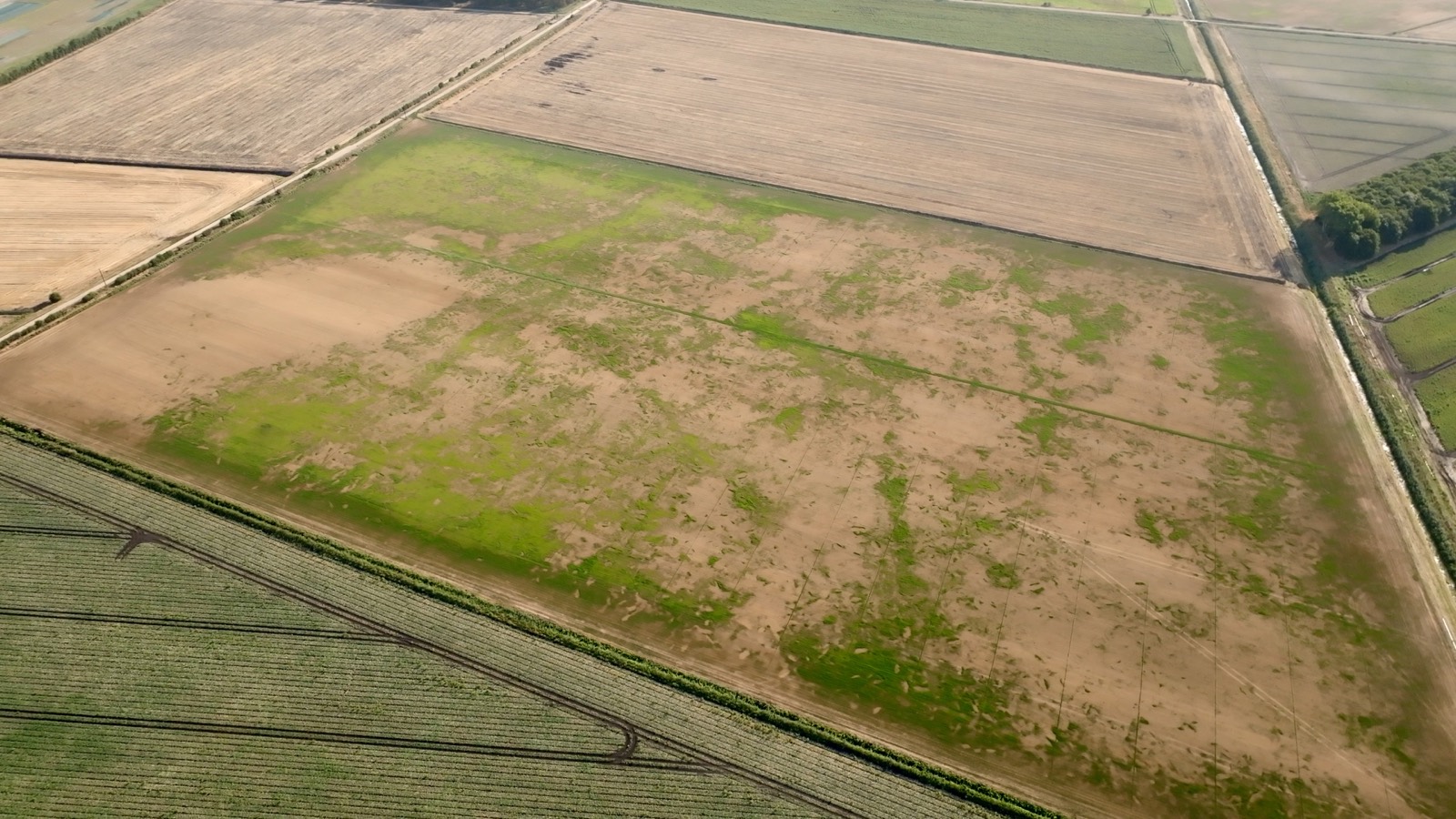
Water is another obvious challenge.
Technology can help growers use available water more efficiently and precisely. But during prolonged periods of extreme heat and drought, the frequency with which turf requires water can increase dramatically.
There is also a fundamental limit no amount of technology can overcome:
Efficiency can help growers make the best possible use of a resource, but it cannot create more of that resource.
At GDT, our role has always been about much more than simply supplying turf.
For 25 years, we’ve worked closely with landscapers and our grower partners, giving us a perspective from both ends of the supply chain.
And what happens in the field ultimately matters to the people laying turf weeks and months later.
Growing conditions can influence when crops establish, how quickly growing areas recover, when turf can be harvested and the pressures involved in maintaining consistent quality and availability.
That’s why understanding what’s happening within turf production matters to the landscaping industry too.
It also makes the continued investment taking place across the growing sector increasingly important – whether that’s in machinery, water management, irrigation, data, grass varieties or the expertise required to respond to more unpredictable conditions.
For decades, turf growers have responded to changing conditions and pressures by becoming more efficient.
That drive isn’t going to stop.
But the experience of 2026 has demonstrated why the industry’s next challenge is also about resilience.
As Harrowden Director Stuart Ridd-Jones explains:
“We can invest in better machinery, use data to make smarter decisions and apply water and fertiliser with greater precision. We can continue improving the way we grow, and we absolutely will.
“What we can’t do is manufacture water that isn’t available or control the conditions in which our crops have to grow.
“The challenge now is not simply becoming more efficient. It’s making sure we’re adapting and building resilience into the way we grow for the conditions we’re increasingly likely to face.”
For GDT and our customers, being part of those conversations matters.
Efficiency is about doing more with the resources available. Resilience is about remaining productive when the availability and reliability of those resources change.
The turf industry has transformed enormously over the past 25 years. As the conditions in which turf is grown continue to change, the challenge now is making sure the industry continues to adapt with them.
Read Harrowden’s full insight into how UK turf production is changing here: Harrowden’s Version
CALL US NOW ON 01234 818 253
 Satisfaction Guaranteed
 99.6% On-Time Delivery
 Open Trade Account