

- Lawn Turf
- Paving & Stone
Get In Touch With Our Experts Today!
Give us a Call! - Composite Decking
- Soil
- Bark
- Dressing
- Artificial
- Timber
- Seed & Fertiliser
Sign up to get our latest news and blog posts in your inbox
August 13, 2024
Right now, the UK is experiencing some rather glorious hot and sunny weather. Although this is great for family BBQs and summer garden parties, prolonged hot temperatures can significantly impact our lawn’s health and appearance without the right care and attention.
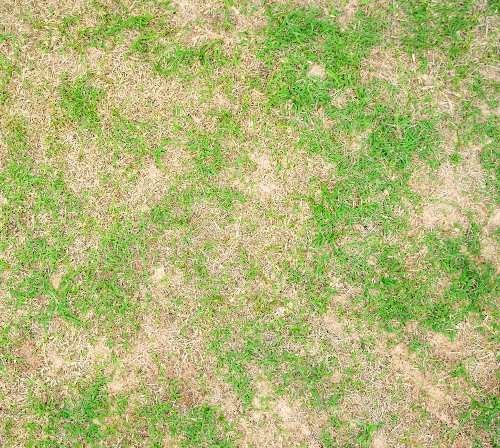
Hot, sunny weather can stress turf and slow down photosynthesis, leading to brown patches, thinning and wilting grass, and an overall decline in lawn quality. Therefore, it’s essential to implement specific care practices tailored to combat the challenges associated with hot temperatures. The following practices will improve your lawn’s immediate resilience and contribute to its long-term health, ensuring that it remains vibrant and strong throughout the year and beyond.
When the temperature rises, most people reach for the hose more often. In most cases, that is not the right approach.
Frequent, shallow watering encourages grass roots to stay near the surface, where they are most exposed to heat and drought. The result is a lawn that looks fine day to day but wilts quickly the moment conditions get tough.
Water deeply, not daily
The correct approach during hot weather is to water deeply and infrequently. Aim for two to three sessions per week, running your sprinkler for 40 to 60 minutes per session, delivering around 2.5 to 3cm of water across the week in total. This pushes moisture 15 to 20cm into the soil, where roots will follow. A deeper root system is more resilient, stays cooler, and is far better equipped to handle prolonged dry spells.
A 2024 University of Reading study found that lawns watered deeply two to three times a week survived heatwaves 30% longer than lawns watered lightly every day.
Timing matters
Water between 4am and 8am if you can. This is when evaporation is at its lowest and water has the best chance of reaching the roots before the heat builds. Avoid watering after 7pm as overnight moisture on the surface increases the risk of fungal disease.
In peak summer, midday sun can evaporate up to 60% of irrigation water before it reaches the soil. Midday watering is largely wasted water.
Top tip: Place an empty tin can on the lawn while your sprinkler runs. Stop when it has collected around 1 to 1.5cm of water. That is a reliable way to gauge when you have applied enough.
If your lawn goes brown, do not panic
Established UK lawns, which are predominantly cool-season grasses like perennial ryegrass and fescue, can survive dormancy for four to six weeks without rain or watering. The grass turns brown but the roots remain alive underground. It will recover once conditions improve.
Newly laid turf is different
If your turf has been laid within the last six to eight weeks. Newly laid turf has not yet established a root system and needs regular watering, little and often, until it has rooted into the soil below. Once established, move to the deep and infrequent schedule.
Not sure whether your lawn is established enough? and we will be happy to advise.
Did you know you should adjust your lawn mower’s mowing height throughout the year? Mowing your lawn at the correct height is one of the most crucial steps in protecting it during high temperatures, as the height at which you mow your grass significantly impacts its health and ability to cope with stress.
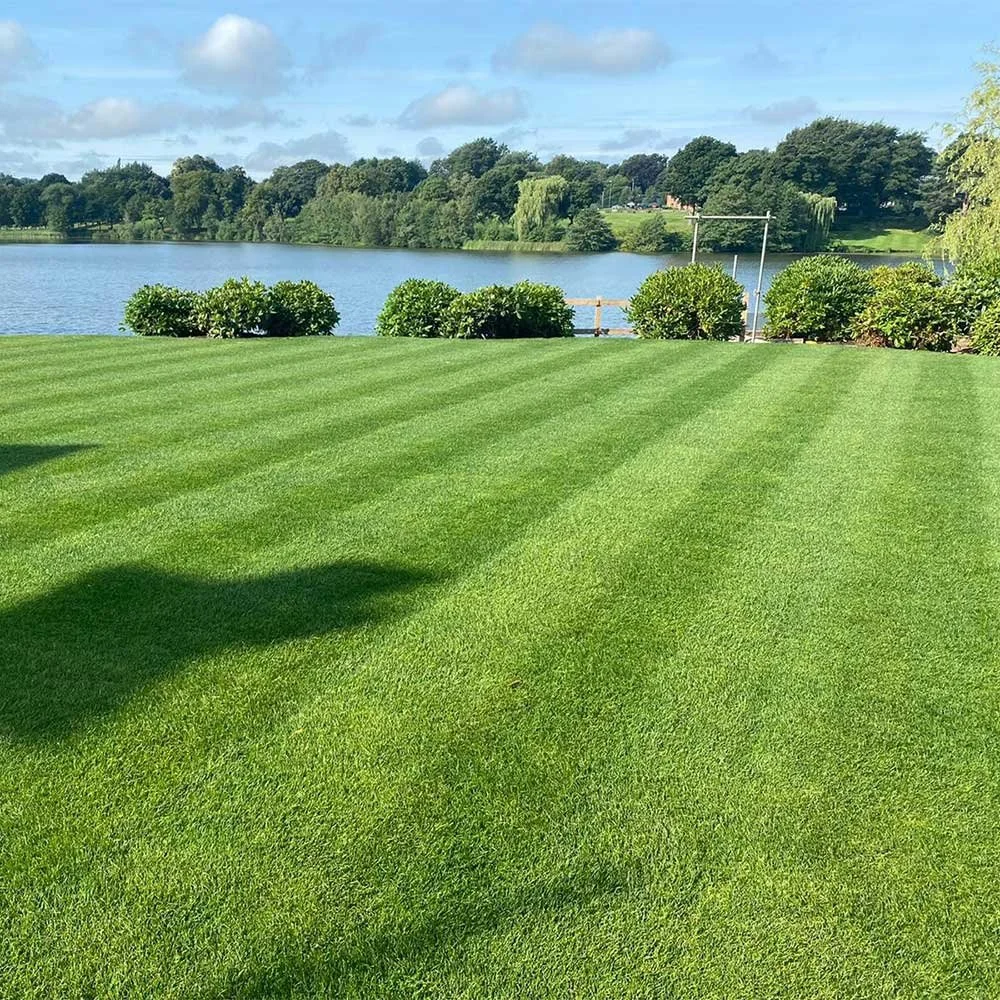
During the summer months, set your mower to cut the grass at a height of around 6 to 7.5 cm. This helps maintain taller grass blades, providing essential soil shade, reducing water evaporation, and keeping the roots cooler. Also, longer blades have more surface area for photosynthesis, which is vital for energy production and growth, even during stressful conditions.
During drought, grass growth slows down, so you won’t need to mow as often. Aim to mow at most once every two weeks or when the grass reaches about 10 cm in height, and never remove more than one-third of the grass blade in a single cutting.
Grass stressed by drought and heat is more vulnerable to damage from foot traffic and other forms of wear and tear. Reducing excessive stress on your lawn during these times can help it recover quickly and prevent further damage. Limit the time spent using your lawn, especially in areas already showing signs of stress. Create designated pathways or use stepping stones to reduce wear and tear on the grass and maintain its health if possible.
A healthy lawn starts with healthy soil – it’s the foundation of drought and pest-resistant grass, especially during hot weather. To ensure that your lawn can withstand heat stress and continue to thrive, it’s essential to conduct proper soil care practices.
Typically, grass thrives in slightly acidic to neutral soil with a pH of around 6.0-7.0. To determine your lawn’s pH level, conduct a soil test. A simple soil pH testing tool is readily available at most garden centres. Based on the results, amend the soil with lime or sulphur to correct pH imbalances.
Aeration is also essential for soil health as it promotes deeper root growth, which is crucial for drought resistance. Be sure to aerate your lawn regularly, especially before the hot season begins, to improve soil structure and allow water, air, and nutrients to reach the roots more effectively.
Fertilising your garden turf during hot weather can burn the grass, so it’s essential to do this carefully. Better yet, fertilise your lawn earlier in the year to provide it with vital nutrients without causing any damage.
If you have missed the early springtime fertilisation window, you can use a slow-release fertiliser that gradually feeds the grass over time. This prevents nutrient overload and reduces the risk of fertiliser burn, which can be particularly damaging in hot weather. Look for a fertiliser with a balanced ratio of nitrogen, phosphorus, and potassium and avoid fertilising during the peak heat of summer. Instead, fertilise in the early morning or late evening when temperatures are cooler.
Prolonged hot weather can exacerbate pest and disease problems, as stressed lawns are more susceptible to infestations. Therefore, proactive prevention is vital to keeping your lawn healthy. During the summer months, keep a close eye on your lawn for signs of pests, such as leatherjackets, chafer grubs, and ants, which are more active in hot weather. If pest problems arise, consider using organic treatments, such as neem oil, diatomaceous earth, or insecticidal soaps, which are effective and less harmful to the environment.
While grass needs sunlight to photosynthesise, excessive heat can actually inhibit growth and lead to scorched or dead patches. Providing essential shade where possible is vital to protect your lawn from extreme sun, especially during the hottest part of the day. If you can, plant trees, shrubs, or other landscaping features that shade lawn areas most exposed to the sun. Be mindful of the types of plants you choose, ensuring they complement your lawn’s aesthetic and can also withstand prolonged heat and sun exposure. For areas that cannot benefit from natural shade, consider using temporary shade structures, such as shade cloths or canopies, during the hottest part of the day. These can be particularly useful for protecting newly seeded or sensitive lawn areas.
Caring for a lawn during drought and prolonged hot temperatures requires a combination of proactive and responsive strategies. By adjusting mowing practices, watering wisely, fertilising appropriately, and reducing stress and sun exposure, you can help your lawn thrive despite the challenges posed by the UK’s increasingly unpredictable climate.
Remember that every lawn is unique, so observe how your grass responds to these practices and adjust your care routine accordingly. Read this guide for more solutions on dealing with dry grass and identifying the causes.
CALL US NOW ON 01234 818 253
 Satisfaction Guaranteed
 5 Star Reviews
 99.6% On-Time Delivery
 Open Trade Account