ANNUAL MEADOW GRASS
Don’t panic; it’s only grass…
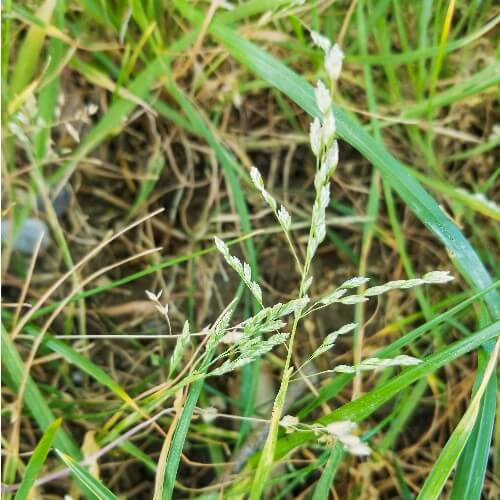
Annual Meadow Grass, or to give its Latin name, Poa Annua, is one of the most widespread native grass species in the UK. It can be found everywhere from the Arctic Circle to Tierra del Fuego, so it stands to reason it’s in your domestic lawn, too. When the seed heads are visible, they can be unsightly and often considered a weed – but don’t be fooled!
What is Annual Meadow Grass?
Meadow Grass, or Poa, is a very strong grass species capable of growing at sea level all the way to mountain tops. We have seen it grow by the side of the road or even on a driveway! It can grow anywhere because it has no underground root system and thrives in wet, warm conditions.
As it is such a hard-wearing grass type, it is the dominant species in nearly all UK golf greens. It has a paler shade of green, a coarser grass texture, and, when it flowers, it has white seed heads that look like mini ears of corn.
Why is it growing in my lawn?
Because Meadow Grass can grow nearly anywhere, it does, in fact, grow everywhere. That means it can appear in your domestic or commercial lawn, too. Turf growers used to be able to control Poa and even remove it from turf using a selective herbicide, but this is no longer allowed in the UK. Now, our attention has turned toward managing Annual Meadow Grass in lawns, both old and new.
What can I do to get rid of it?
You can manually remove clumps of Meadow Grass by using a knife to cut diagonally through the root and pull it up out of the lawn. You can also apply a spot weedkiller to the area. To repair any bare patches, apply a thin layer of topsoil, then sow in a good-quality seed mix, such as our Green Velvet Lawn Seed.
Is it Meadow Grass a weed?
No, meadow grass is not a weed. It is a robust grass seed, but because of its resilience and ability to grow in any environment, it can often be mistaken for a weed. Meadow grass will not damage or take over your lawn like weeds can.
How can I manage Meadow Grass?
The best way to control Meadow Grass is to manage its appearance. This comes down to a good mowing and growing routine:
Good mowing starts with your mower. Meadow Grass is a coarse grass, so you need your mower blade to be sharp so it cuts through. Meadow Grass naturally flattens. To aid your mowing, use a spring rake to lift the seed heads up, so they stand tall and are easier to cut. Always use a collection box to remove all clippings, as these may include seed heads that will spread if left. Mow your lawn regularly to encourage healthy growth throughout.
Good growing involves using a high-quality fertiliser, which will improve the condition, health, and resilience of the whole lawn. The right fertiliser, such as our Spring/Summer Envy Fertiliser, can also help darken the colour of Meadow Grass, enabling it to blend in with the rest of your lawn.
In Conclusion…
Annual Meadow Grass is unsightly and unwanted to most lawns, but it is one of the most natural grass species in the UK, so please use our management tips to help your lawn look its best. For more guidance, read our Ultimate Guide to Lawn Fungus & Disease.
CHAFER GRUBS
A real bush tucker trial in your garden…
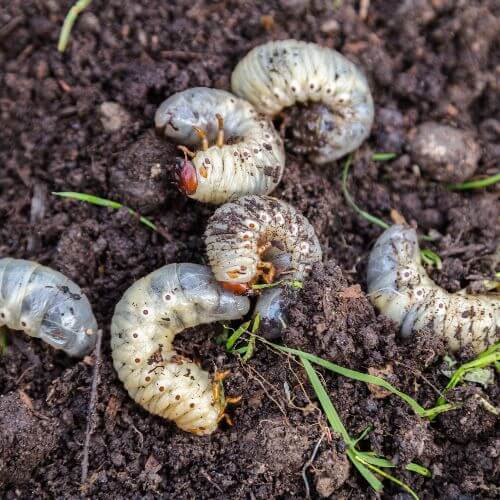
Chafer grubs are the larval form of the Chafer Beetle. They are an off-white colour and often curl into a “C” shape. They can grow up to 1.5 inches in size and have three pairs of legs – so, they can look a little creepy! What you need to know is that they thoroughly enjoy eating the root structure of both new and old lawns.
Where do they live?
During spring and summer, Chafer grubs live in the soil under your turf, feeding on grass roots. Later in the autumn, they burrow deeper into the soil to escape the cold. Depending on the type of Chafer grub you have, they can live up to three years.
What damage do they cause?
Chafer grubs feed on the lawn’s roots, restricting how the turf establishes when laid. It can also prevent essential nutrients from being absorbed and harm growth. Animals and birds love to feed on Chafer grubs because they are an easy food source, but to reach them, they scratch and turn over the turf, which can impact its condition and appearance.
Can I get rid of Chafer Grubs?
Yes! If you see Chafer grubs on your turf, simply pick them off by hand. If there are some left, don’t worry; a few here and there won’t cause too much trouble. Chafer grubs can also be controlled with a biological nematode, microscopic worms that will attack the grubs and eat them. You can no longer use insecticides, as they can harm the health of the birds and bees in your garden, but nematodes are child-, pet-, and wildlife-safe. You can also use a bird or animal scarer to prevent secondary damage.
Were they in my turf when it was delivered?
No. Our turf is checked thoroughly before delivery, and we spot any Chafer grubs on the outside of the turf rolls. Chafers are mainly found in the soil under the lawn as the ground is being prepared, ready for turf. If, on the rare occasion, you do spot a Chafer grub in your turf delivery, you don’t need to be concerned unless you find five or more grubs under one hand.
In Conclusion…
Chafer grubs can damage your lawn, but only when present in large numbers. Most of the damage is actually caused by the animals and birds trying to eat them. Once you have removed the grubs, you can overseed the lawn to repair any damage using Green Velvet Lawn Seed. For more guidance, read our Ultimate Guide to Lawn Fungus & Disease.
FUSARIUM PATCH DISEASE
Nobody wants trouble with the Fuzz…
Fusarium is the most common turf disease in the UK. It is a fungal disease that is a result of the atmospheric and ground conditions in your garden. It is very quick to develop because it has short incubation period. This means tell-tale signs can be visible in as little as 24 hours.
What does it look like?
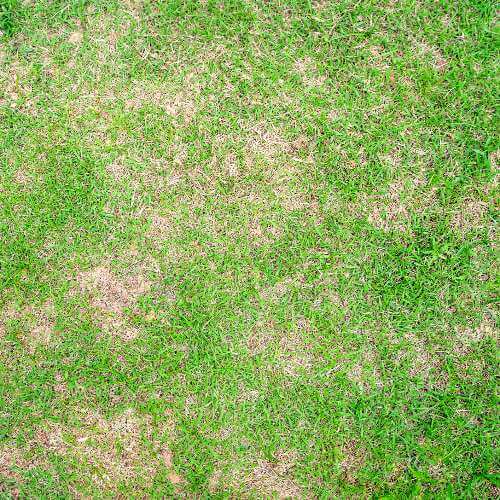
It is orange or brown patches that start off about the size of your fist and can spread larger if conditions that caused it, stay the same. There may also be white or slightly pink, cotton wool looking fluff that forms on the affected areas. Another sign is the patches not holding the morning dew.
What causes it?
The conditions in the garden, and it is most likely to occur when temperatures are mild during the day and at night. The grass plant staying wet during the day, and airflow over the lawn being minimal are factors that make the ideal settings for Fusarium to appear. It can appear on a new lawn or an established one, although juvenile turf is more at risk.
Can I put anything on it?
There are no chemicals available to non-professionals in the UK. A lawn specialist could apply a fungicide for you.
What can I do about it?
Lots! You need to break the cycle of conditions that are allowing the fungus to flourish.
- If lingering morning dew is a problem, then knock it off with a grass whip or spring rake.
- In autumn don’t let fallen leaves sit on your lawn as they deny the lawn light and keep the grass leaf damp, collect these regularly.
- Be patient! Temperature changes play such a big part in the development of Fusarium, as it gets cooler at night this will naturally put a stop to it.
- Collect grass clippings when mowing your lawn so they don’t sit on the lawn in clumps.
- Don’t walk on the actively affected areas as this can spread it further.
- Lay your turf as soon as you can and do not leave it rolled up for long periods of time.
- Keep your lawn healthy, scarify and aerate it as necessary, and cut it regularly with a sharp mower.
Is it a disease?
Yes, it is but don’t panic, it rarely does more than scar your lawn. Once the new growth starts coming through this can repair itself. You can speed this up by resowing
SeedNova’s Grass Seed over the affected areas.
Did it come in my turf?
We don’t harvest turf that has active Fusarium on it, but it can develop if you leave the turf rolled up for too long. Lay it as soon as you get it, if you can’t then unroll the turf and brush off the water droplets from the grass plant.
Summary
Fusarium is a disease that is a result of the conditions the lawn is subject to. When you break the cycle of the circumstances causing it, it will disappear allowing the lawn to repair itself with new growth. You can help your turf along with good management of the lawn environment, and over seeding it as necessary.
LEATHERJACKETS
“The Fonz” loved a leather jacket, your lawn may not….
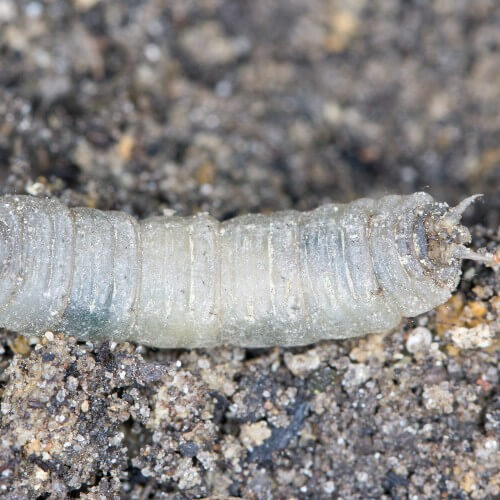
Leatherjacket grubs are the larvae of the European Crane Fly or Daddy Long Legs as we all know them. They are legless grey/brown grubs without a clear head or tail and grow to maximum length of just over an inch.
Where do they live?
They live in the soil under the turf and normally adults hatch in July and August, they then lay eggs within 24 hours. They then stay underground for the winter where they can feed on the roots of the lawn causing the most damage before hatching the following year and flying away.
What damage do they do?
They feed on the roots of the lawn, which restricts how the turf establishes over the winter period as it can’t take up nutrition and can harm growth. Animals and birds love to feed on the grubs as they are an easy food source, and to get at the Leatherjackets they can scratch and turn over the turf.
Can I get rid of them?
Yes, if you see any on your turf then pick them off by hand. You do not need to be concerned by a few grubs here and there. They can also be controlled by the use of a biological nematode applied at the right time of year they will attack the grubs and eat them. Nematodes are child, pet, and wildlife safe. You can no longer use an insecticide, as this can affect the health of the birds and bees in your garden. Leatherjackets will not survive if they are exposed to the sun for a long period of time.
Did they come with my turf?
Only if you could see them on the outside of the rolls of turf when they are delivered or collected. Leatherjackets are mostly laid in or found in the soil under the lawn as the ground is prepared.
Summary
Leatherjackets are always found in your garden but may well not do anything in the way of damage unless they are present in large numbers. Treating them works best when the grubs are in their young soft form in autumn. Once they have gone you can over seed the lawn to repair any damage using
SeedNova’s Grass Seed.
RED THREAD
Is it Thread or dead…?
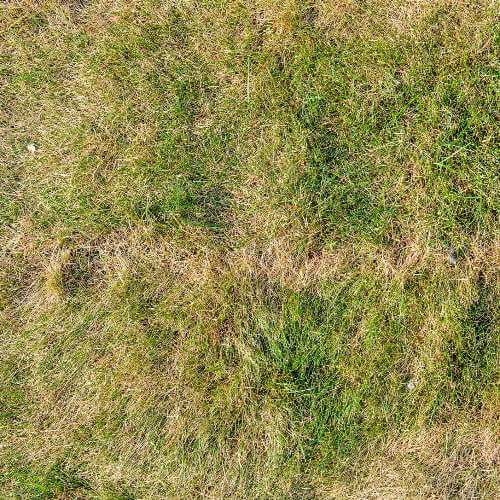
Red Thread is one of the most common turf diseases in the UK, it is a fungal growth, which isn’t harmful to the long-term health of your lawn, but it can be unsightly.
What does it look like?
Patches in your lawn that can be brown or pale pink. The dead looking grass will often be matted together by the fungal growth coming from the grass plant. When you look closely at the growth you will see it, either red needle like threads coming from the end of the grass plant or pink fluffy coral like growth.
What causes it?
Fungal problems in a lawn are usually caused by conditions in the garden. It is most likely to occur when it is wet and humid, and when the soil has low fertility. This can also happen with over watering in Summer, where in an effort to keep the turf alive in hotter and drier conditions, you end up washing the nutrition through the lawn leaving it open to disease.
Can I put anything on it?
Yes, by applying
George Davies’ Envy, a slow release nitrogen enriched fertiliser to your lawn to help address the nutrition deficiency. This will promote new green growth in your lawn and grow out the fungus. A lawn specialist could apply a fungicide to your lawn, but you can get rid of Red Thread following the basics of good lawn management.
Is it a disease?
Yes, it is but don’t worry, if you fertilise your lawn and mow it regularly with a sharp blade it can repair itself very quickly.
Did it come in my turf?
We don’t harvest turf that has active Red Thread on it, it is a disease that is a result of the conditions the lawn is subject to.
Summary
Red Thread is an annoying disease that can make your lawn look unsightly and appears due to a lack of nutrition in the lawn. Don’t worry it can be repaired with good turf management. Apply a slow release fertiliser that has a high nitrogen factor and mow the lawn regularly to stimulate new growth.
TOADSTOOLS
You don’t need to be alarmed; it is just a Fun-guy.
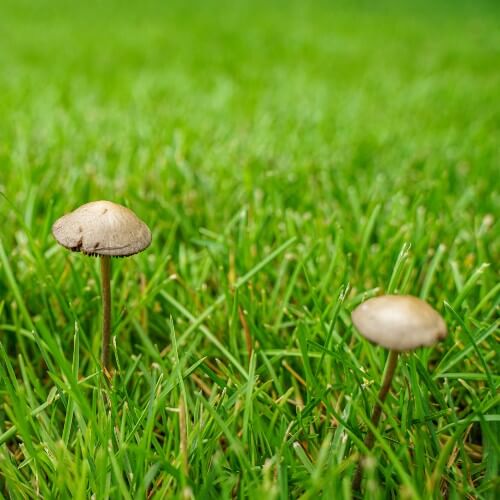
You will often find small brown toadstools/mushrooms or fungi in freshly laid lawns if the turf has been laid in warmer conditions. The arrival of these toadstools in your new turf can be a worry for parents and pet owners and this page is designed to give you peace of mind.
What are they?
It’s likely they are the Brown Hay Cap toadstools, but there are many species that can grow in your garden.
Is it a Toadstool or a Mushroom?
There is not a standard definition of either that experts agree on. Whatever you have growing in your new lawn it is likely that the treatment is the same.
Why are they growing in my lawn?
When your turf is harvested, the root system of the grass plant is placed under temporary stress, as it is moved from the place it has been nurtured from seed for over a year to its forever home in your garden. So many of us can relate to the strain that we are under when moving house and it is no different for your new turf.
Microscopic bacteria and fungi are present in all soil types up and down the country and they start to feed on the excess root material under the lawn. This is normal and natural process for your garden to through. Under certain conditions the fungi can move into a reproductive phase, and this will cause the toadstools to flourish through your turf. Once the food source for the fungi has been exhausted or the conditions have changed then the toadstools will disappear, and they are unlikely to reappear.
When do Toadstools appear?
Fungi love warm and damp conditions. There are several times this can happen when turfing your lawn in the year. If air temperatures are warmer and the sun is out you will naturally be watering your new lawn more, this creates the ideal moist microclimate allowing the toadstools to grow usually popping up a few days after laying the turf. Occasionally the fungi can lay dormant over the cooler winter period then flourish in the new lawn’s first Spring as temperatures rise.
How long do they last?
Until the ground and atmospheric conditions have disappeared, or the food source has run out. Normally this takes a couple of weeks and sometimes there can be a second lesser bloom.
Did they come in my turf?
It is unlikely because the spores are in all soil types everywhere up and down the country.
Are they a disease?
No. Let’s face it; no one wants to see toadstools popping up in their new lawn. Since they don’t arrive at the same time as your turf when you roll it out, its often easy to think the turf is suffering when they do appear. But it is just nature being nature and the turf is adjusting to its new home in your garden.
Are they poisonous?
Unless you’re a Mycologist, that’s a really FUN-GUY to me and you, it would be nearly impossible to be certain if they are poisonous or not. As a precaution, it would be sensible to keep children and pets away from them so they can’t eat them.
Can they be treated?
There isn’t anything that a homeowner or landscaper can apply to a lawn to prevent toadstools, or once they have appeared, in the UK.
How can I get rid of them?
They will disappear naturally, once the conditions that have allowed them to spring up, fade away. You can speed this up by mowing the lawn and removing the heads of the mushrooms. Make sure you use a collection box to get rid of the plant waste and clippings and set your cut height no lower than 25mm to avoid damaging your new lawn. Another tip is to use a stiff broom to knock the heads off the toadstools. Both of these techniques will cause the mushrooms to dry out since they are largely made up of water.
Summary
Toadstools are a regular natural problem experienced by new lawns. But they aren’t anything to worry about, its nature being nature, and will soon disappear. You can speed the process up, but it is only a short term issue.


 Satisfaction Guaranteed
 5 Star Reviews
 99.6% On-Time Delivery
 Open Trade Account